The Missing Decade of Breast Data
We spoke with BeSound founder Bailey Renger about the access gap that led her to start the company, and what years of standardized breast scans could change.
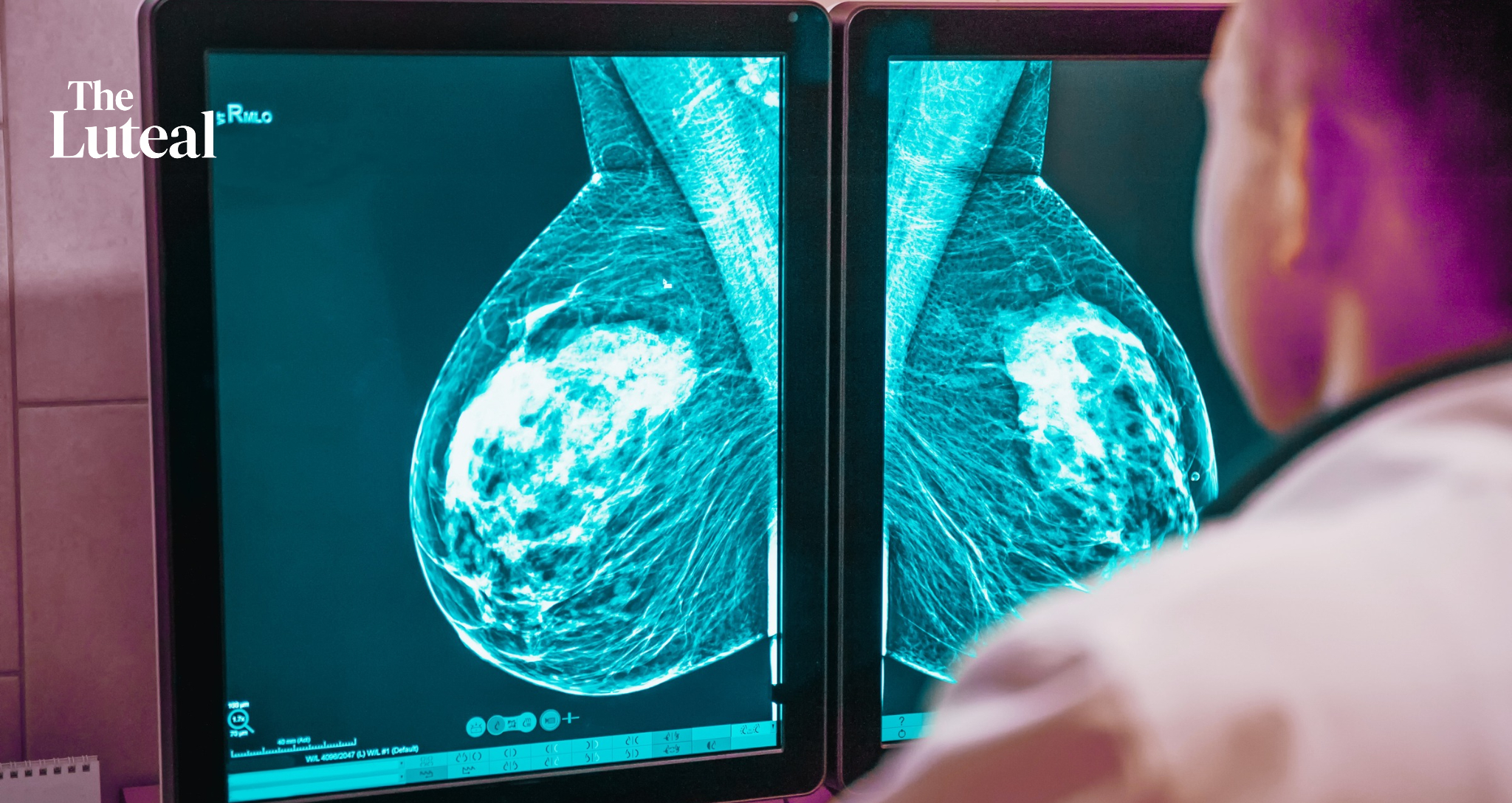
In 2015, a study led by breast radiologist Rachel Brem and published in Radiology screened 15,318 women with dense breasts at 11 US centers, first with a mammogram and then with automated 3D ultrasound.
Mammograms found 82 cancers. Ultrasound found 30 more, about 2 for every 1,000 women screened, and 28 of those were invasive.
The extra scan came with costs. Callbacks for more tests nearly doubled, and the study did not measure whether finding those cancers saved lives. It was paid for by the scanner's original maker, U-Systems, now part of GE HealthCare. The women in it averaged 53 years old.
Getting that second scan is still hard. In 2024 the US Preventive Services Task Force said there was not enough evidence to recommend extra ultrasound or MRI for women with dense breasts. Most insurance coverage for extra imaging kicks in only after a mammogram, and routine mammograms start at 40.
Bailey Renger saw that gap as a physicist. After a cancer scare at 21, while she was interning at NASA, she read the research on every way medicine images a breast.
"Mammograms are X-ray based. And ultrasound is sound waves, and then MRI is radio waves," she said. "So the result is they show you the breasts in a different way."
For dense breasts, the difference matters. Dense tissue and cancer "show up as the same color on a mammogram," she said. "We know that ultrasound really is better at imaging dense breasts, but it largely wasn't covered. You have to fight for it. You can't get it until age 40. You have to start with a mammogram."
"That just didn't make sense to me as a left-brain physicist," Renger said. "This technology is clearly better for dense breasts, and women can't access it. It's not even a technology or physics problem. It's really just how can we improve access to this technology?"
BeSound is her answer. It offers automated 3D breast ultrasound directly to women, on GE HealthCare's Invenia ABUS, which sweeps the whole breast the same way every time with no squeezing and no radiation. A scan costs $349 and needs no referral. Brem now advises the company.
Renger started BeSound to fix access. What she is building along the way is a dataset breast screening has never had at this scale.
The first sign is who is walking in. Renger estimated that 40% to 50% of BeSound's patients are under 40, many of them between 35 and 40. BeSound has not published an exact figure or its total number of scans. "If you think about how that group of women has nothing in the standard healthcare system, it's a really surprising and meaningful number," she said.
Younger women have reason to come. The American Cancer Society's Breast Cancer Statistics 2024 found diagnoses rose 1.4% a year in women under 50 from 2012 to 2021, twice the rate in older women. Most of the rise was in early-stage cancers, and the faster increase was statistically significant only among White women.
The American College of Radiology recommends every woman have her risk assessed by 25. Unless she is found to be high risk, no guideline sends her for a scan.
Her own scare went the same way. "I was dismissed by doctors, and nothing against doctors, but that happens to a lot of women," she said. "I believe that if a woman has a concern, the frontline should be data, not does the doctor believe you enough to order something to get data?"
She hears the same story from her patients. "We hear a lot that they're told they're too young for breast cancer, they don't have family history, or that it's probably nothing," she said. "And then we hear stories of it actually was breast cancer."
The scans themselves are the second part of the dataset. A handheld ultrasound depends on who holds the probe, so two scans a year apart are hard to compare.
"Let's say you have a lesion, which I actually do in my left breast," Renger said. "We can track it over time and we can see exactly how it's changing versus when you have a handheld ultrasound done by a human and then next year they do it again, it's a totally different human, your images are completely different."
Consistent scans also open questions screening has never answered at scale, starting with timing. In a 2011 Radiology study of 387,218 mammograms, regularly screened premenopausal women had 79.5% of their cancers caught in the first week of their cycle. Later in the cycle, mammograms caught 67.4% to 73.0%. Across all women, accuracy did not differ by week. Nearly all of that research is on mammograms, and a small ultrasound pilot of 20 women at ETH Zurich found no difference.
Renger is testing it on herself. "I'm getting a scan every day of my cycle," she said, "because no one's done that either."
Hormone therapy is another. "A woman in her 50s or 60s who starts HRT, her breasts now look like she's 30," Renger said. In a 2005 Women's Health Initiative substudy of 413 women past menopause, density rose 6.0 percentage points after a year on estrogen plus progestin and fell 0.9 points on placebo. More women may start soon, after the FDA began removing breast cancer and other warnings from the black box label on menopause hormone therapy in November 2025.
"That sort of correlated data, especially with HRT or birth control or your cycle date, has never been collected before at this scale," Renger said.
The biggest payoff would be a risk tool for women mammograms don't reach. In 2025 the FDA authorized Clairity Breast, the first AI tool allowed to estimate a woman's five-year breast cancer risk from a mammogram. Because it reads a mammogram, it reaches only women who get one.
"We're working to build the equivalent for ultrasound, and that means that 5-year risk tool could reach younger women," Renger said. "It could work in dense breasts. It could work in women who don't want to get a mammogram." BeSound's tool is still being built and has not been tested or authorized.
It will take time. Clairity's model was trained on more than 450,000 mammograms and tested on 77,511 exams from women followed for five years, according to the company and its FDA decision summary. FDA rules require test data that reflects the women a tool will be used on.
Standardized ultrasound scans of women under 40, followed for five years, barely exist, because women that age usually get a breast ultrasound only to check a lump. The record also only works if BeSound can learn what happened to each woman afterward. That is harder for a clinic that sees her when she books than for a health system that holds her records.
If it works, the payoff reaches past BeSound. The same record could become the evidence insurers and guideline groups would need before paying for scans in younger women or in women with dense breasts. It could also show whether screening should be timed to a woman's cycle or adjusted for hormone therapy. "If we're able to close that gap, then we're able to totally reimagine what breast cancer as a disease really looks like," Renger said.
"We believe that the cure for breast cancer really is early detection," she said. Breast cancer found before it spreads beyond the breast has five-year relative survival above 99%, according to the American Cancer Society. Once it spreads to other organs, that falls to 32%. Those figures compare stages, not screening tests.
The money in breast imaging has mostly followed the mammogram. In April, Blackstone and TPG completed their take-private of Hologic, one of the biggest makers of mammography machines, in a deal valued at up to $18.3B. Part of the price is tied to breast health revenue targets. In 2025 RadNet bought iCAD, which makes AI that reads mammograms, for about $103M in stock, and Clairity raised a $43M Series B.
Ultrasound companies working outside the mammogram are raising far less. iSono Health says it has raised $14.7M to date. BeSound raised a $6.8M seed.
Coverage is starting to move. BeSound expects to accept insurance by the end of the year for women over 40 with dense breasts, and Renger said women paying cash already fill most of its capacity.
New York has required full coverage of extra breast scans for women with dense breasts since 2017 and this January extended no-cost coverage to ultrasound and MRI recommended under national guidelines. A federal rule now requires most plans to cover extra imaging that follows a mammogram at no cost.
Renger's advice to other founders is that "it's not that hard to get these contracts." She had expected otherwise. "I always thought it was like this big elusive unlock, but we're doing it, and it's happening."
For women under 40 who aren't high risk, the scan stays a cash purchase. BeSound opened in New York on October 15 and opens in Dallas this month.
Asked what she wishes every woman knew about her breasts, Renger went back to the years she was left out of. "From the ages of 20 to 40, there's no technology, no data, no imaging at all. And I think that's a huge miss," she said. "We have the technology to be able to get your baseline and learn about your density and learn your risk and have a plan at a young age. That's what I want every woman to know, because that's empowering."
In 2015, ultrasound found 30 cancers that mammograms missed among 15,318 women with dense breasts. Eleven years later, the task force still says the evidence is too thin to recommend the scan, and almost none of it covers women under 40.
Insurers are waiting on the evidence. The evidence is waiting on the scans.
By 2030, BeSound's earliest scans will have five years of follow-up behind them. Renger is betting they give women's health its first clear picture of the breast before 40.
The Luteal covers the business, science and policy of women's health. Nothing here is medical advice.
---
Sources
- Interview with Bailey Renger, founder and CEO, BeSound, October 30, 2026. Quotes verbatim with filler words, false starts and interruptions removed. Under-40 patient share (approximate range of 40% to 50%), insurance timeline, Dallas opening, mobile and employer program, care pathway and AI risk tool plans are company-stated.
- Miglioretti DL, Walker R, Weaver DL, et al. "Accuracy of screening mammography varies by week of menstrual cycle." Radiology 2011;258(2):372–379. 387,218 screening mammograms, 1,283 cancers, Breast Cancer Surveillance Consortium; regularly screened women (66.6%) sensitivity 79.5% in week 1 vs 70.3%, 67.4% and 73.0% in weeks 2 to 4; no overall difference; first-time screeners (17.8%) opposite trend, P = .051; self-reported last menstrual period. Primary. https://pmc.ncbi.nlm.nih.gov/articles/PMC3029886
- Breast density assessment in young women with ultrasound based on speed of sound, influence of the menstrual cycle. Medicine 2019;98(25):e16123 (ETH Zurich). 20 women aged 18 to 40, scanned twice two weeks apart; no significant follicular-luteal difference (P = .126); experimental speed-of-sound method. Primary. https://pmc.ncbi.nlm.nih.gov/articles/PMC6636937
- McTiernan A, Martin CF, Peck JD, et al. "Estrogen-plus-progestin use and mammographic density in postmenopausal women: Women's Health Initiative randomized trial." Journal of the National Cancer Institute 2005;97(18):1366–1376. 413 women; mean percent density +6.0 points at year 1 vs −0.9 placebo; abnormal mammogram relative risk 3.9; conjugated equine estrogens plus medroxyprogesterone acetate. Primary. https://doi.org/10.1093/jnci/dji279
- US Department of Health and Human Services and FDA, menopausal hormone therapy labeling announcement, November 10, 2025; FDA approval of first six relabeled products, February 12, 2026. Primary.
- US Preventive Services Task Force. "Screening for Breast Cancer: US Preventive Services Task Force Recommendation Statement." JAMA, April 30, 2024. Biennial screening mammography ages 40 to 74; insufficient evidence (I statement) on supplemental ultrasound or MRI for women with dense breasts. Primary. https://pubmed.ncbi.nlm.nih.gov/38687503/
- Giaquinto AN, Sung H, Newman LA, et al. "Breast cancer statistics 2024." CA: A Cancer Journal for Clinicians 2024;74(6):477–495. Incidence up 1% a year 2012–2021; 1.4% under 50 vs 0.7% at 50 and older; under-50 increase significant only among White women; rise largely localized, hormone receptor positive disease. Primary. https://doi.org/10.3322/caac.21863
- Monticciolo DL, et al. "Breast Cancer Screening for Women at Higher-Than-Average Risk: Updated Recommendations From the ACR." Journal of the American College of Radiology, May 3, 2023. Risk assessment for all women by 25. Primary.
- Brem RF, Tabár L, Duffy SW, et al. "Assessing improvement in detection of breast cancer with three-dimensional automated breast US in women with dense breast tissue: the SomoInsight Study." Radiology 2015;274(3):663–673. 15,318 women, 11 centers, mean age 53.3; 82 cancers by mammography, 30 more with ABUS (1.9 per 1,000), 28 of them invasive; recalls 150.2 to 284.9 per 1,000. Funded by U-Systems (now GE HealthCare); lead author is a BeSound advisor. Primary. https://pubmed.ncbi.nlm.nih.gov/25329763/
- FDA De Novo DEN240047, Allix5 (Clairity Breast), decision May 30, 2025. Five-year risk prediction from a bilateral 2D screening mammogram; pivotal validation on 77,511 exams from 44,112 patients. Primary, FDA decision summary.
- Hologic, "Blackstone and TPG Complete Acquisition of Hologic," April 7, 2026; merger announcement October 21, 2025. Up to $79 per share ($76 cash plus CVR up to $3 tied to Breast Health revenue goals in fiscal 2026 and 2027); enterprise value up to $18.3 billion. Company-stated. https://www.hologic.com/sites/default/files/Acquisition%20Close%20Press%20Release.pdf
- RadNet and iCAD, merger announcement, April 15, 2025 (SEC Form 8-K, iCAD). All-stock transaction valued at approximately $103 million; completion reported by AuntMinnie Europe. Primary. https://www.sec.gov/Archives/edgar/data/749660/000119380525000483/e664385_ex99-1.htm
- Clairity, "Clairity Raises $43 Million in Series B," Business Wire, November 13, 2025. Led by ACE Global Equity and Santé Ventures. Company-stated. https://businesswire.com/news/home/20251113374784/en/
- AuntMinnie, "Clairity deploys AI for breast cancer risk prediction," June 2025. Trained on more than 450,000 mammograms; validated on more than 77,000 with five-year outcome data. Secondary, company statements.
- FDA special controls, 21 CFR 892.8500 (radiological software device to predict future breast cancer risk). Clinical test dataset must be representative of the intended use population. Primary, via DEN240047 decision summary.
- iSono Health, ATUSA launch release, Business Wire, January 14, 2026, and AuntMinnie, January 16, 2026. $14.7 million raised to date, Series A opened. Company-stated. https://www.businesswire.com/news/home/20260114276390/en/
- American Cancer Society, "Survival Rates for Breast Cancer," SEER data for women diagnosed 2015–2021. Five-year relative survival above 99% localized, 87% regional, 32% distant. Primary. https://www.cancer.org/cancer/types/breast-cancer/understanding-a-breast-cancer-diagnosis/breast-cancer-survival-rates.html
- New York State Insurance Law amendments (S8093), signed June 27, 2016, effective January 1, 2017. First state to require full coverage of supplemental imaging for women with dense breasts. Via ITN. https://www.itnonline.com/article/new-york-passes-insurance-bill-requiring-coverage-breast-screening-supplemental-imaging
- New York State S.2465C/A.1696C, effective January 1, 2026. Coverage of breast screening and diagnostic imaging, including ultrasound and MRI, per nationally recognized clinical guidelines, without cost-sharing except where needed for HSA eligibility. Primary, NY Senate release. https://nysenate.gov/print/pdf/node/12041763
- Health Resources and Services Administration, update to the Women's Preventive Services Guidelines (breast cancer screening for women at average risk), approved December 2024, effective for plan years beginning on or after December 20, 2025. Additional imaging and pathology needed to complete screening after an initial mammogram covered without cost-sharing. Primary, as quoted by DenseBreast-info. https://densebreast-info.org/updated-federal-breast-screening-recommendations/
- BeSound NYC flagship release, October 15, 2026, via Femtech Insider. Flatiron opening, GE Invenia ABUS. Company-stated. https://femtechinsider.com/besound-opens-nyc-breast-imaging-clinic-plans-national-expansion/
- Fortune, September 30, 2025. $6.8M seed, Renger's cancer scare at 21 while interning at NASA. Secondary. https://fortune.com/2025/09/30/besound-fundraise-breast-cancer-ultrasound-screening-mammograms-oura
- LA Magazine, May 1, 2026. $349 price context, 24 to 48 hour turnaround. Secondary. https://lamag.com/health/besound-breast-cancer-screening-automated-ultrasound-west-hollywood-april-2026-l/